The skyline of Dubai and the futuristic cities of NEOM aren’t the only things which are rising rapidly in the Middle East. Under the surface of these architectural marvels there is also a massive digital transformation. Almost every gulf nation is moving its entire economy to the cloud.
At the heart of this shift is Amazon Web Services (AWS). Whether you are a student, an IT professional or a business leader, understanding the cloud is not optional anymore. It is a major survival skill. However, the path to mastery can be confusing. This guide will serve you as a definitive roadmap to aws training, helping you find the certifications, career paths and the unique opportunities within the GCC market.
1. Introduction to AWS & Cloud Computing
Before we dive into the labs and exams, let’s simplify what we are talking about. In the old days, if a company wanted to launch a website, they had to buy expensive servers, find a cooled room, and hire people to maintain the hardware.
Cloud computing changed that. It is the on demand delivery of IT resources over the internet with pay as you go pricing. Instead of buying “the box,” you rent the power.
AWS (Amazon Web Services) is the world’s most comprehensive and broadly adopted cloud platform. It offers over 200 fully featured services from data centers globally. For the Middle East, this is huge.
AWS is building more tech hubs in the Middle East. As these hubs are now in the UAE and Bahrain and soon Saudi Arabia, local apps will work much faster. It will also make it easier for companies to keep their data inside their own country.
2. Why AWS Skills Are in High Demand in the Middle East
The Middle East is currently one of the fastest growing tech hubs in the world. But why is everyone talking about aws training specifically?
-
National Visions:
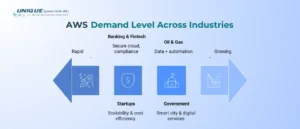
Saudi’s Vision 2030 and Qatar National Vision 2030 are driving “Cloud First” policies. Government entities are migrating massive databases to the cloud to provide better & fast citizen services.
-
Giga-Projects:
Projects like NEOM, the Red Sea Project and Expo City Dubai rely on AI, IoT,ml all of which are powered by AWS.
-
Digital Sovereignty:
With local AWS data centers, industries like BFSI (Banking, Financial Services and Insurance) and Healthcare can now move to the cloud while complying with strict local data residency laws.
-
The Skills Gap:
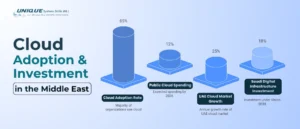
Research shows that while 85% of Middle East organizations have started their cloud journey, a huge percentage struggle to find “cloud-ready” talent. This creates a massive opportunity for you.
3. What You Learn in AWS Training
A common misunderstanding is that aws training is just about watching videos. Real world training is hands on and covers several critical pillars of aws
Core AWS Services
You will master the “Big Three”:
- Compute (EC2): How to launch virtual servers in seconds.
- Storage (S3): How to store and recover any amount of data with 99.99% durability.
- Networking (VPC): How to build a private & secure fence around your cloud resources.
Security and Compliance
In the Middle East, security is the First priority. You will learn about the AWS Shared Responsibility Model, Identity and Access Management (IAM) and how to encrypt data to meet regional standards.
Real World Projects
Top tier AWS training programs don’t just teach theory. You may build a localized e-commerce backend or a serverless application that scales automatically during the Dubai Shopping Festival or Ramadan sales peaks.
4. AWS Certification Learning Paths
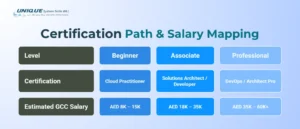
AWS has structured its certifications into four main levels. Here is how you should plan your journey:
Beginner Path (Foundational)
- AWS Certified Cloud Practitioner: This is the entry point. It’s perfect for non technical roles (Sales, HR, Management) or students who want a high level information of the cloud.
Associate Path (The “Job Ready” Level)
If you are looking to start your career in tech, these are the four main paths you can take:
- Solutions Architect: The most popular path. You learn how to build systems that are strong and don’t cost too much money.
- Developer: This is for people who want to write code and put their apps online.
- SysOps Administrator: This is for people who want to manage the daily work and make sure everything is running smoothly.
- Data Engineer: A great choice for 2026. You learn how to move and organize huge amounts of information.
Which one fits you?
The beauty of AWS is that it has a dedicated Certification Path for every personality. Whether you want to design the house (Architect), build the rooms (Developer), maintain the plumbing (SysOps), or manage the library (Data), there is a specific set of services for you.
- The AWS Solutions Architect
If you like building plans, you are the one sketching the blueprint on a digital whiteboard before a single line of code is written.
Your Tools: You’re thinking about AWS Organizations for structure, VPCs for networking, and Route 53 for traffic flow.
The Goal: A good system is secure, high-performing, resilient, and efficient.
- The AWS Developer
If you like writing code, you are building for the cloud.
Your Tools: AWS Lambda for serverless functions, Amazon DynamoDB for fast data storage, and the AWS SDK or CDK to deploy your code.
The Goal: You turn business logic into functional software. You care about how fast your code runs and how easily it can be updated.
- The AWS SysOps Administrator
If you like fixing problems and keeping things stable, you are the guardian of the environment.
Your Tools: You are the master of Amazon CloudWatch for logs, AWS CloudTrail for auditing, and AWS Systems Manager for automation.
The Goal: You are the first line of defense. When a server reaches 90% CPU usage or a security group is misconfigured, you’re the one who automates the fix before it becomes a crisis.
- The AWS Data Specialist
If you like working with data, you are the one building the “plumbing” that moves information across the global infrastructure.
Your Tools: You spend your time in AWS Glue for ETL (Extract, Transform, Load), Amazon S3 for the data lake, and Amazon Redshift for high-speed warehousing.
The Goal: You take “raw” data, which is messy and useless, and turn it into “refined” data that the business can actually use to make decisions.
Professional Path
- Solutions Architect (Professional): For people with at least 2 years of experience. You learn how to design very large and complex systems.
- DevOps Engineer (Professional): This is all about automation making sure code updates and fixes happen automatically and smoothly.
Special Skills
Security: Keeping data safe from hackers.
Networking: Connecting complex computer systems together.
Machine Learning (AI): Teaching computers how to learn. This is currently the most popular choice because of the huge AI boom in countries like the UAE and Saudi Arabia.
5. Corporate vs Individual AWS Training
When it comes to upskilling, there are 2 main approaches.
Benefits of Corporate AWS Training
Many GCC-based firms now invest in Corporate vs individual AWS training to transform their entire IT department at once.
- Team Alignment: Everyone speaks the same “cloud language.”
- Customization: Training can be customized as per the company’s specific migration project.
- Retention: Employees also feel valued when the company invests in their skills and personal growth.
Benefits of Individual AWS Training
If you are a freelancer or a job seeker, individual training is your ticket to a higher salary.
- Flexibility: Learn at your own pace while working.
- Marketability: A certified individual can move between industries (e.g., from Oil & Gas to Fintech).
- Global Credibility: An AWS badge is recognized from Silicon Valley to Singapore.
Which is better? For career builders, individual training is essential. For organizations aiming for digital maturity, corporate programs are the gold standard.
6. Career Opportunities After AWS Certification
What does the job market look like after you finish your aws training? In cities like Dubai, Riyadh and Doha, the rewards are significant.
- Cloud Solutions Architect: This role is about creating the “building plans” for computer systems in the cloud.
- DevOps Engineer: Connecting the gap between development and operations by using automation.
- Cloud Security Specialist: A critical role for government and financial sectors, These roles get premium salary.
- Data Engineer: Building the infrastructure that allows AI models to work.
Salary Trends in the Middle East (2025-2026)
Certified professionals typically see a 25-30% salary increase compared to their non-certified peers. In Saudi Arabia, as part of the “Saudization” of the tech sector, certified local talent is in exceptionally high demand.
7. Final Certification Strategy for 2026
If you are planning for certification strategy for 2026, keep these things in mind:
- The Rise of Generative AI: Don’t just learn EC2, learn AWS Bedrock also. Companies are looking for people who can integrate AI models into their cloud infrastructure.
- Serverless First: Moving away from managing servers (EC2) toward serverless (Lambda). This saves companies budgets.
- Hybrid Cloud Mastery: Most Middle East companies will keep some data on site. Learning how to connect on premise data centers to AWS (using AWS Outposts or Direct Connect) is a “superpower” skill.
- Sustainability: AWS is pushing for “Green IT.” Understanding how to optimize architecture for energy efficiency is becoming a required skill for large scale tenders.
8. How to Choose the Right AWS Training Program
Before you register for any course check for these four things:
- Instructor Quality: Is the trainer an AWS Authorized Instructor? Do they have real world experience in the Middle East market?
- Hands on Labs: You cannot learn the cloud just by reading or watching ppt’s. Make sure that course provides live AWS account access.
- Exam Prep: Program should have mock exams and interview workshops?
- Industry Projects: Look for courses that include projects relevant to regional industries like Logistics, Petrochemicals, or Fintech.
9. Conclusion
The cloud is going to be more important in the coming years in the Middle East. If you are aiming for a promotion, a career change, or trying to future proof your business, aws training is the most effective investment you can make today.
With the right roadmap and certification strategy, you can position yourself at the front of the region’s digital revolution.
Ready to lead the cloud revolution? Explore our AWS Training Programs and start your journey toward becoming an AWS Certified professional today!