Navigating the Data-Driven Era: Why Data Science Is Transforming GCC Careers
Organizations in the GCC are quickly adopting new technologies in order to compete globally. According to the World Economic Forum, data related professions such as data scientists and AI specialists are expected to grow and have approximately 34% more workers than now over the next 10 years.
When considering a transition to data analytics, the majority of professionals want to know about Data Science Course Fees before determining if they can reasonably afford to pursue this career path. The costs of training vary greatly based on where you take your classes. However, generally speaking, the high demand for well-trained data professionals will lead to huge ROI on your Data Science Course Fees.
Additionally, understanding the overall outlook for this career field is critical. Many of the professionals that are coming out of courses of study in data science have questions concerning whether there is really going to be enough market demand to justify the time and money invested in their training. The answer is clear; the fintech, healthcare and smart city sectors are aggressively hiring for analytics roles.
Professional job seekers in the area must understand the new training ecosystems that they are being exposed to. They also need to understand how to
Understanding Data Science Course Fees in the GCC
When looking at Data Science Course Fees training in the Gulf region (GCC), prices vary based on how much help, hands-on practice, and job support you get. Simple online courses are the most affordable way to start, usually costing between AED 525 and AED 800, and they focus on basic skills like Python and statistics.
Mid-level programs are more structured and cost between AED 1,200 and AED 4,600 because they include a real instructor, a project to work on, and a mentor to help you along the way. These mid-level options often provide the best balance between learning quality and data science course fees.
The most expensive options are university-linked programs, which range from AED 5,500 to AED 35,000 and provide a prestigious certificate but don’t necessarily include internships or big projects with real companies.
For hiring managers, the price of a candidate’s course is not an indication about how much “real-world” experience they actually have. Higher-priced courses usually don’t necessarily mean that with the higher Data Science Course Fees the student spent a lot of time working on industry-level projects and receiving expert feedback. Understanding these different levels helps students choose the right Data Science Course Fees for investment to their career goals and helps companies understand the value of the training on a resume.
What Influences Data Science Course Fees?
Four main factors determine how much a Data Science Course Fees in the Gulf region. Understanding these helps you see why some programs are more expensive than others:
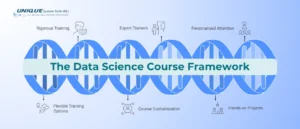
- Curriculum Depth: Courses that teach advanced topics like deep learning and AI systems often increase data science course fees because they require more advanced training resources.
- Instructor Expertise: Programs taught by industry experts can raise data science course fees, these trainers can share real-world secrets and business advice you can’t find in a book.
- Project-Based Learning: Working on real datasets and solving actual business problems have higher Data Science Course Fees. This hands-on practice is valuable because it shows employers can actually do the work, not just talk about it.
- Career Support: Good institutions include extra help like writing your resume, practicing for interviews and helping you find a job. While this makes Data Science Course Fees more expensive, it often helps students get hired much faster.
Data Science Salary After Course Completion in the GCC
Many individuals feel that one of the major reasons they are attracted to this profession is due to the possibility for high earning potential. Within the GCC, there are many job opportunities that support working professionals with Data Science Salary After Course. This is especially true for tax-free income provided by some of the countries within the Gulf area. Before diving into salary expectations, it’s important to understand how data science course fees compare to the potential return on investment in the GCC job market.
Generally, Entry-Level Professionals begin their career with an expected average salary of AED 144,000 to AED 216,000 after successfully completing a Data Science related training program. The actual salary will vary depending on the company’s skill set of the applicant.
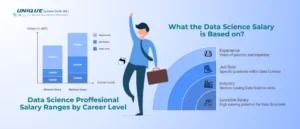
As professional experience is added and measurable results are positively changed within an organization, the person’s salary is positively affected. Mid-Career professionals can expect an average annual salary of AED 168,000 to AED 360,000 depending on whether they are working in Finance, AI Research or Enterprise Analytics.
Senior Level professionals will typically lead the Analytics Strategies within an Organization, with salaries exceeding AED 500,000 annually because of their significant return on the investment of a Data Science course.
These salary ranges clearly highlight that investing in the right program while considering data science course fees can deliver exceptional long-term career returns.
Exploring Data Science Job Roles and Salary in the GCC
The term “data science” implies quite a variety of distinct jobs within the medium used as an umbrella term for multiple disciplines across a range of business needs. While exploring these roles, many learners compare Data Science Course Fees to understand which career path offers best ROI.
Data Analyst
A data analyst gathers, cleans, and interprets datasets in order to provide insight to various business departments and specialty areas. In addition to being skilled at statistical analysis and data visualization, the data analyst position serves as an entry point to an advanced analytics career. Most graduates with a data analysis degree will be able to enter the workforce as a data analyst, which is one of the lower-level salaries in data science.
Data Scientist
A data scientist utilizes machine learning algorithms (ML) to create predictive models that help solve some of the most complex business problems. After completion of their degree and skills, the data scientist’s role will command a greater data science salary because of the advanced mathematics and programming skill set required to perform at this level.
Machine Learning Engineer
As the name implies, machine learning (ML) engineers are focused on designing and deploying Artificial Intelligence (AI) models at scale. Because of the technical complexity of their role, these data science jobs compete for higher salary expectations than traditional data analysts.
Data Engineer
Data Engineers create the pipelines and infrastructure necessary to store and process large amounts of data (big data). Without the pipelines or infrastructure created by the data engineer, true advanced analytics cannot happen.
Business Intelligence Analyst
Business Intelligence (BI) analysts transform raw data into visual formats (dashboards and reports) using reporting software (Power B I or Tableau) that will allow business executives to make strategic decisions.
Each of these roles offers unique opportunities and understanding them alongside data science course fees can help you choose the right path for long-term career success.
Industries Driving Career Opportunities After Data Science Course Certification
As the Gulf region (GCC) builds a digital future, many professionals are considering a Data Science Certification Course, as it opens doors to high-paying jobs in several growing industries. Because countries like the UAE and Saudi Arabia are investing billions into new technology, companies are looking for experts to help them use data more effectively. Before enrolling, many learners also compare data science course fees to find the best value for their investment.
Financial Services and Fintech
Banks and financial apps are using “predictive analytics” to stay safe and grow. This means they use data to spot fraud before it happens, calculate credit risks more accurately, and understand exactly what customers want. As more people use digital wallets and online banking, data experts are needed to make these systems faster and more secure.
-
Smart Cities and Government
The GCC is famous for massive projects like NEOM and the Dubai Paperless Strategy. These “Smart Cities” use sensors to collect huge amounts of information from the streets and buildings. Data specialists analyze this info to manage traffic flow, predict how much energy a city will need, and keep the public safe by spotting emergencies in real-time.
-
E-commerce and Technology
Online shopping is exploding in the region. Companies use “recommendation engines” (like “you might also like” section) and demand forecasting to make sure they have the right products in stock. By studying how users behave on their websites, these businesses can create a much better and faster shopping experience for their customers.
With so many opportunities across industries, understanding data science course fees and choosing the right program can be your first step toward a successful career in the GCC.
How Placement Programs Bridge the Gap Between Training and Employment
Obtaining a certificate is an excellent initial move, yet becoming employed professionally in data science often requires more than a piece of paper. That is why many learners compare data science courses along with placement support, as structured placement programs which serve as a bridge between training and the workplace so that you are more than just “paper-smart” and actually prepared for employment.
The structured placement program generally contains several services, including:
-
Resume and LinkedIn makeovers –
Recruiters use AI to search for thousands of resumes in mere seconds by 2026 so that you can learn which “keywords” will give you a greater chance of getting your resume seen. You also will be provided assistance to create a professional LinkedIn profile showcasing your true capabilities to employers worldwide.
-
Mock interviews –
There is a significant difference between discussing data and actually working with data, by participating in mock interviews, you will practice how to properly respond to difficult technical and behavioral questions in a secure environment. This will develop your confidence, and assist you in overcoming the shock you might experience when meeting directly in front of a hiring manager.
-
Real-world projects and internships –
Rather than just reading textbooks, you will be working on various actual business issues and will use actual data. This will allow you to compile a portfolio (a collection of experiences to demonstrate to a prospective employer that you have already performed successfully in the position).
-
Corporate Partnerships –
A few of these training centers are associated with various large corporations through a partnership arrangement and as a result, graduates of such a program receive a first-pass opportunity to attend interviews for jobs that have not yet been advertised on any public job boards.
Evaluating Return on Investment: Balancing Data Science Course Fees and Career Outcomes
Although most people look at the Data Science Course Fees when choosing a course, the real value of a data science program comes from its guidance and practical support (mentorship). Thus, considering it a smart investment to pay more for a Data Science Course offering hands-on projects where experts from the field will teach you, along with job placement services.
Graduates of these quality programs will become skilled at using the tools that are critical to data scientists, including Python, SQL, and Power BI. Having worked with real-world data gives graduates the ability to turn raw data into actionable insights much faster than someone without experience.
From a hiring viewpoint, many recruiters, and HR professionals will tell you that graduates from these respected programs are far more qualified to meet the requirements of an office environment. Graduates do not only know about math and algorithms, but they can also effectively communicate with other businesses and develop relationships with other departments.
Unique System Skills GCC is an IT institute that provides training, staffing and consulting to help people develop careers in high demand fields such as Data Science, Cloud Computing and Cybersecurity. The company has a strong emphasis on hands-on training, real-world projects and placement support for candidates, thus allowing them to become industry-ready right away.
Combining international experience and strong partnerships with organizations, Unique System Skills has created an effective bridge between learning and working and allows individuals to reach their career goals in the competitive job market of the GCC.
The Future of Data Science Careers in the GCC
According to a report by PwC, Artificial Intelligence is expected to add $320 billion to the Middle East’s economy by 2030. Because governments are investing so heavily in AI, cloud computing, and digital technology, the need for data professionals is growing rapidly. Once you become a certified data scientist, you will find many new job opportunities in industries like finance, healthcare, shipping (logistics), and energy.
To successfully switch to a career in data science, you need to invest your time in the right education and stay updated on which technical skills companies will need in the future. Success comes down to two things: a financial goal to earn a good salary and a personal desire to keep learning and solving complex problems.