Introduction: The New Era of the AI Website in Saudi Arabia
The way websites have traditionally been built is changing dramatically. For many years, it took software engineers and web developers weeks and months to create a website using only the HTML, CSS, and backend database code that they had written by hand. The manual approach to web development is simplifying itself in 2026 as software development technologies evolve from providing only a coding language to providing a way for engineers to utilize smart computer agents in the development of websites, while not requiring them to write billions of individual lines of code manually. The rate at which the Middle Eastern region is experiencing this transition is unlike that of any other part of the world. Building a modern, high-performance AI website in Saudi Arabia is no longer just a cool experiment for tech startups but it has now become a necessary baseline for any organization that wants to be successful within the rapidly changing and highly competitive digital economy
The rapid pace of this change is closely tied to the Kingdom’s national agenda, called Vision 2030, which is an overarching plan to establish new business opportunities, enhance social conditions, improve overall Emirate living standards and maintain the current pace of demographic expansion within Saudi Arabia as a major population center. As part of this vision, the Saudi government is investing heavily into creating global centres of excellence in leading-edge technology in cities like Riyadh and Jeddah, with the intention of developing them into long-term technology centres of excellence.
Local data shows that more than 21.5% of internet users in the country are already using smart tools every day. For any business or developer, the speed of launching an online platform and keeping server costs low will decide who wins the market. To achieve this incredible speed, tech teams building an AI website in Saudi Arabia must learn how to use a brand-new set of advanced software programs.
Essential AI Development Tools for Modern Engineers
In order to remain competitive in this rapidly evolving marketplace, software developers need to continuously modernize their daily coding environments; as further evidence of their growing obsolescence, traditional text editing tools (such as Notepad or TextEdit) have been replaced with sophisticated AI-driven software applications that do so much more than simply help you find misspelled words. For example, GitHub Copilot and ChatGPT started out as just simple auto completers, but now function as vital, virtual team members of virtually any modern software development inside many organizations. As such, within a new-style software development organization, these latest generation applications are being used to take care of all heavy lifting activities associated with developing software; Developing the overall layout of a website, developing complex, logical programming code, and quickly identifying and fixing any “hidden mistakes” made by human developers during the coding process. This allows human engineers to spend their time on creative problem-solving and system security.
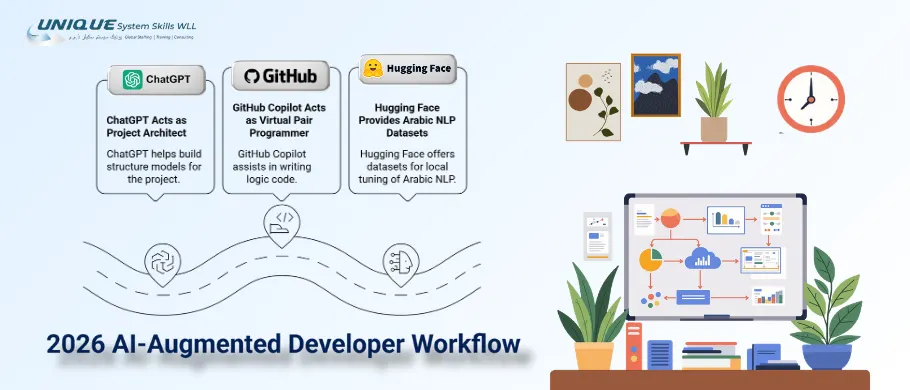
Using these AI development tools correctly cuts down the time it takes to launch a business application from months to days. For instance, developers can use ChatGPT as a virtual software architect. By feeding it a simple text prompt, the system can instantly generate complete website outlines, structural plans, and backend database schemas. This automated starting point removes the common problem of developer block and gets the project moving immediately. When working on a modern AI website in Saudi Arabia, this automated skeleton becomes the foundation for all custom features. Once the basic structural blueprint is ready, the workflow shifts directly to creating beautiful, responsive user interfaces.
Rapid Prototyping with Cutting-Edge AI dev tools
The phase where designers and frontend developers constantly argue over visual layouts is coming to an end. Modern frontend engineering relies heavily on advanced AI dev tools that convert design concepts into clean, functional code in minutes. For example, platforms like Figma AI allow teams to take basic wireframes or hand-drawn sketches and transform them into interactive user interface designs instantly. This bridges the gap between a creative concept and a functional application blueprint, saving hundreds of hours of design adjustments.
Once the visual design is set, developers can use frontend engines like Vercel v0 to generate production-ready UI components using simple text instructions. If you type a request for a “high-converting, responsive business checkout form,” the engine instantly outputs clean code that works perfectly with modern web frameworks. For a startup in Riyadh, using these specialized AI dev tools means they can build, test, and change consumer-facing features in a single afternoon. This rapid speed is exactly what allows teams to deliver a competitive AI website in Saudi Arabia ahead of traditional schedules. However, building a successful digital business in the Gulf region requires looking beyond Saudi borders to understand how neighboring tech markets connect.
Regional Synergy: Bridging AI app dev in Bahrain and KSA
The technology ecosystem across the Gulf Cooperation Council (GCC) is deeply interconnected. When building an AI website in Saudi Arabia, it is highly beneficial to look at the progress being made in AI app dev in Bahrain. While Saudi Arabia focuses on massive industrial projects and smart city developments like NEOM, Bahrain has built a highly specialized tech sector centered around financial technology (fintech) and advanced cybersecurity frameworks. Interestingly, many tech teams driving this regional synergy are supported by top Indian IT professionals and offshore development centers, creating a powerful India-GCC technology corridor.
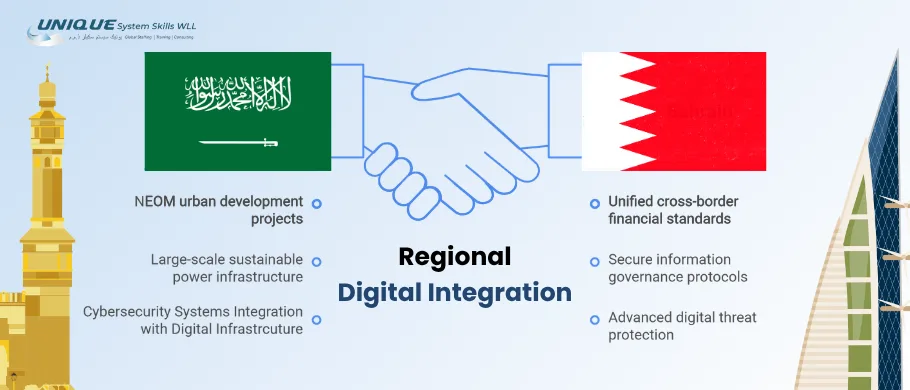
This regional connection creates a massive demand for tech professionals who understand how to build software that works smoothly across borders. Bahrain’s advanced work in financial software development directly supports the large e-commerce and retail systems growing in Saudi Arabia. Additionally, both countries share similar, strict regulatory environments. Every single modern application must follow local data laws, such as the Personal Data Protection Law (PDPL) managed by the Saudi Data and AI Authority (SDAIA), alongside strict guidelines from the National Cybersecurity Authority (NCA). This means data must be kept and processed safely within local regions, such as the Google Cloud ME data center. To build these legally compliant and highly advanced systems, developers must prove they have elite skills.
Professional Mastery through AI for Web Certification
Knowing how to use a few basic prompts is no longer enough to land a top-tier tech job in the Middle East. Companies in Riyadh and Jeddah are actively hunting for certified specialists who understand the deep engineering concepts behind the software. Earning a professional AI for Web Certification has become the best way for IT workers and tech students to stand out from the crowd. This validation proves to hiring managers that you understand complex workflows like machine learning operations (MLOps) and predictive data analytics. Read our previous blog for a more detailed roadmap for front-end development.
A specialized AI for Web Certification also proves that a developer can handle the unique challenges of the Middle Eastern market, such as Arabic Natural Language Processing (NLP). Standard global AI models often struggle with local dialects and cultural contexts. Certified engineers know how to use platforms like Hugging Face and specialized datasets to train smart systems that understand the local Saudi dialect perfectly. This expertise is highly valued when creating an AI website in Saudi Arabia across multiple industries, from e-commerce brands building smart chatbots to logistics firms predicting supply chain routes. To understand how all these pieces fit together, let us look at the step-by-step process of building a real platform.
Practical Implementation: From Prompt to Deployment
Building a high-performance AI website in Saudi Arabia requires a clear, organized workflow. The process follows a structured path that turns an idea into a live, secure, and compliant online business application:
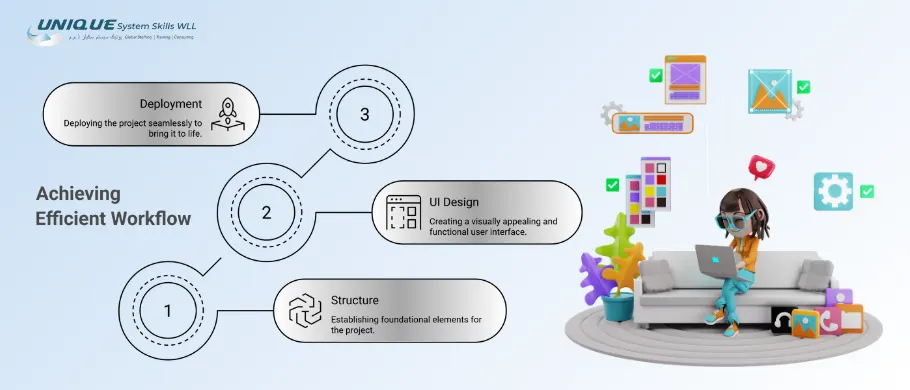
- Step 1: Structural Architecture: Start by using ChatGPT to generate the underlying architecture, database schemas, and content models for your application based on your exact business requirements.
- Step 2: Visual Interface Generation: Feed those structural blueprints into frontend AI dev tools like Figma AI and Vercel v0 to instantly generate clean, responsive UI components that match your brand identity.
- Step 3: Intelligence & Language Tuning: Use advanced AI development tools like GitHub Copilot to integrate custom backend logic and connect Arabic NLP models, ensuring the platform communicates naturally with local users.
- Step 4: Secure Cloud Deployment: Launch the application using full-stack platforms like Vercel AI or local cloud servers. Make sure the entire system follows the Kingdom’s PDPL privacy rules, keeping user data perfectly safe and localized.
By following this modern pipeline, developers can launch highly resilient digital platforms at a fraction of the traditional cost. The Middle East AI market is growing incredibly fast, with market projections highlighted by The Economic Times showing it will skyrocket from $1.07 billion to over $4.02 billion within the next decade. As this sector expands, it will contribute an estimated $235.2 billion to Saudi Arabia’s GDP. This massive growth means there is an unprecedented demand for skilled professionals who can manage these systems. Getting the right training is the absolute best way to secure your place in this high-paying market.
Conclusion: Future-Proofing Your Career with Unique System Skills
The rapid growth of the tech industry means that standing still is the same as falling behind. While advanced software tools are incredibly powerful, they still need a skilled human engineer to guide them, connect them, and keep them secure. To truly lead this digital transformation and build a successful career, you need an educational partner that understands the practical needs of the local job market.
This is exactly where Unique System Skills (USS) can help you succeed. USS provides a highly practical, instructor-led training program designed to help you earn your professional AI for Web Certification. The course is built around real-world tools and major cloud platforms like Python, Azure ML, and IBM Watson. Instead of just listening to boring theoretical lectures, students work on actual, practical projects based on the business needs of tech hubs like Riyadh, Dubai, and Manama. This curriculum is designed by premier corporate training experts from India’s tech capitals, ensuring world-class upskilling methodologies. You will learn to build advanced tools like:
- Smart, AI-powered chatbots designed for local customer service.
- Predictive data models that help e-commerce brands forecast shopping trends.
- AI-driven SEO automation engines tailored specifically for GCC businesses.
Unique System Skills also provides complete, 360-degree career guidance and job placement assistance to help you land high-paying roles like Web AI Developer or AI Marketing Analyst. The program is completely beginner-friendly, making it an excellent path for female professionals looking to join the tech workforce under the goals of Vision 2030.
Imagine the massive impact on your professional future when you can walk into any business meeting and show leaders a live, high-performance AI website in Saudi Arabia that you designed, coded, and deployed yourself. With the right training, the right tools, and a clear path forward, you can rise far above the competition. Take complete control of your future today: upgrade your skills, earn your professional certification, and become a leader in the Middle East’s booming digital economy.